Big-4 level consultants are now in your pocket
A few months ago, I was helping a small business owner think through their marketing.
They had a decent Instagram page. A WhatsApp number for bookings. A logo they liked. And a vague sense that they needed “more content.”
What they actually needed was a strategy. But strategy, historically, was the expensive part.
What consultants used to cost
If a small business wanted real marketing strategy, they had two options.
Hire an agency and pay €3,000 to €10,000 a month. Or hire a freelance consultant and pay €1,500 to €5,000 for a strategy document that may or may not get implemented.
For a yoga studio with 40 members or a café serving 80 covers a day, that math never worked. So most small businesses skipped the strategy and went straight to tactics. They boosted a post. They ran a discount. They asked their nephew to “do the social media.”
And then they wondered why nothing stuck.
What changed
AI changed the cost of strategic thinking. Not the cost of execution. That was already getting cheaper. The cost of the thinking itself.
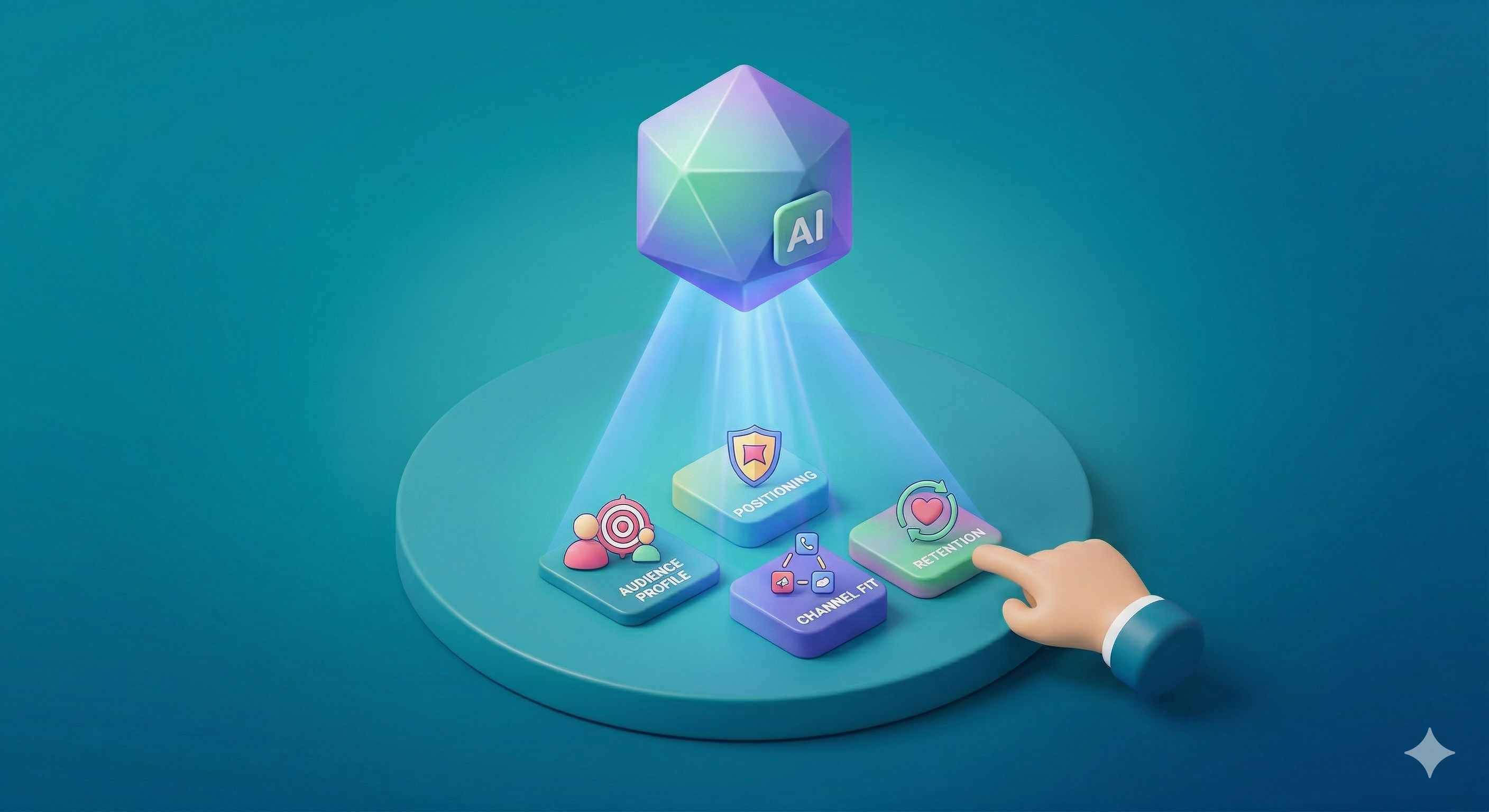
A decent AI model, used well, can now do what a junior-to-mid-level marketing consultant would do. It can audit your positioning. Identify your target audience with real specificity. Map your competitors. Suggest pricing strategy. Build a content framework. Identify where you are losing customers before they even walk in the door.
Is it as good as a senior partner at McKinsey or KPMG? No. Not even close.
But it can get you to 80 or 85% of that quality. At maybe 1% of the cost.
For a small business, 80% of a real strategy is infinitely better than 0% of one.
Where most businesses get this wrong
When small business owners think about AI and marketing, they think about execution.
Write me a caption. Generate me five email subject lines. Give me ad copy for this promotion.
That is not wrong. But it is the least valuable use of AI in a marketing context.
The more valuable question is: what should we even be saying, to whom, and why would they care?
That is a strategy question. And AI can help answer it, if you ask it properly.
What foundational strategy actually looks like
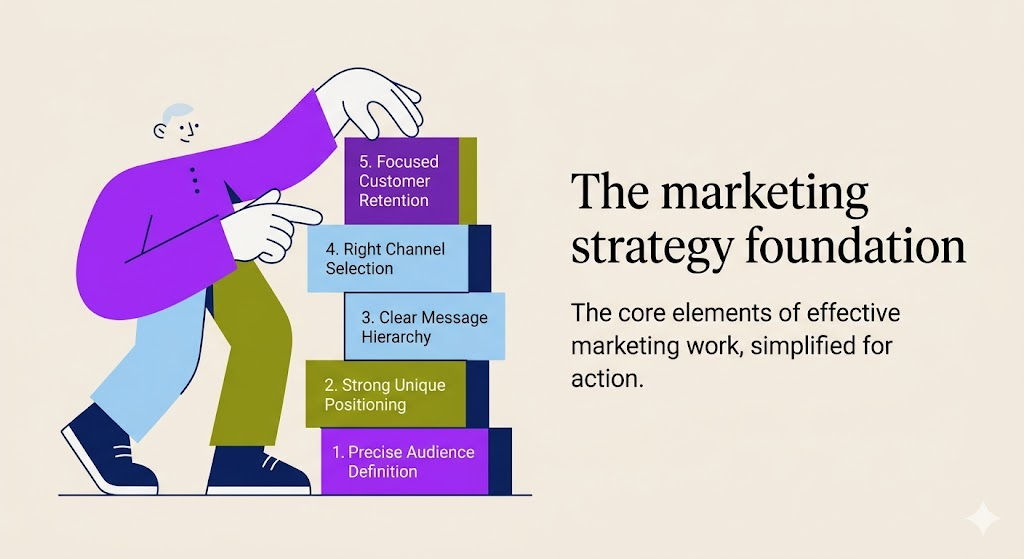
Here is a simple version of what strategic marketing work involves, and what AI can now help a small business do on its own.
Audience definition. Not “people who like yoga” or “people who like Vietnamese food.” Something precise. Who is the specific person most likely to become your best customer? What do they fear, want, and already believe? AI can help you think through this with real depth if you give it enough context about your business.
Positioning. Why should someone choose you over the three alternatives within walking distance? Most small businesses cannot answer this question clearly. AI can pressure-test your answer and help you sharpen it.
Message hierarchy. What is the single most important thing you want a first-time visitor to your website or Instagram to understand? Everything else should support that one thing. AI can help you audit whether your current materials actually do this.
Channel fit. Where does your specific customer actually spend their attention? The answer is not always Instagram. AI can help you think through this based on your audience profile, not based on what is trendy.
Retention over acquisition. Most small businesses spend 90% of their marketing energy trying to find new customers. AI-assisted strategy work often reveals that the bigger opportunity is keeping existing customers longer and converting them into advocates. This is cheaper and more effective.
How I have seen this work in practice
I worked with a yoga studio. Their instinct was that they needed more social media content.
After working through the strategy questions with them, it turned out their actual problem was different. They had decent foot traffic. What they lacked was a clear reason for someone to come back a second time and a third time. Their messaging was entirely acquisition-focused. There was almost nothing communicating value to someone who had already walked in.
The fix was not more posts. It was a clearer retention message and a simple follow-up system.
A café client had a similar story. They were spending energy on promotions. But they had no language for what made them different from the three other cafés nearby. Once they had that, their word-of-mouth did more work than any discount ever had.
Neither of these insights required a consultancy. They required good strategic questions, answered honestly. AI made that accessible.
What this means for you
If you run a small business and you have been using AI to write content, that is a fine start.
But the bigger opportunity is using AI to answer the questions that come before the content.
Who are we talking to? What do we want them to believe? Why should they choose us? Where are we losing them?
Spend an hour with a good AI model on those questions before you write a single caption. The content will be better. More importantly, the strategy behind it will finally exist.
What is the one marketing question you have been avoiding because it felt too big or too expensive to answer properly?
Written by Amit Srivatsa
Marketing Strategist & AI Consultant